


<da:widget wytiwyg="1" type="twitter.share" value="{'url':'fav.me/d8hh4nt','counturl':'ht… White People: Let’s talk about race.,'via':'DeviantArt'}"/>
<da:widget wytiwyg="1" type="facebook.share" value="{'type':'button_count','width':'180'}"/>
<da:widget wytiwyg="1" type="google.plusone" value="{'size':'medium','techgnotic.deviantart.com/art/…}"/>
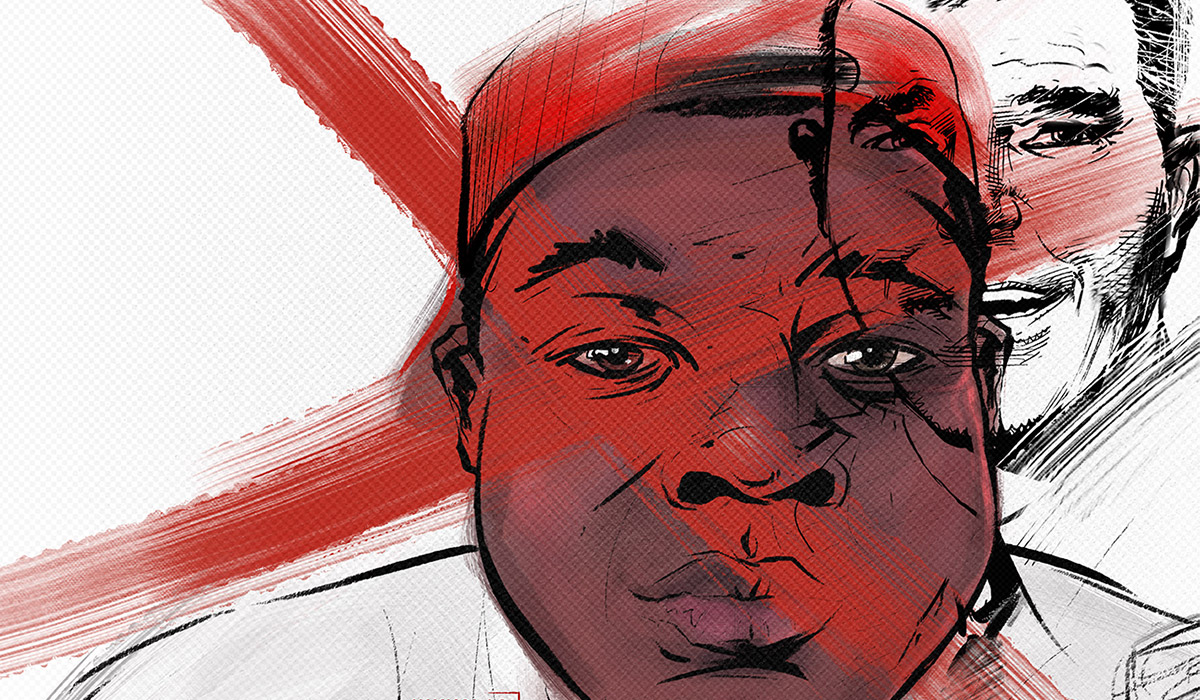
Dear White People, the minimum requirement of black friends needed to not be racist has just been raised to 2. Sorry, but your weed man, Tyrone, does not count.”
— Sam White, Dear White People
The Sundance award–winning film “Dear White People”
Marking the debut of director Justin Simien, examines the question of race and racism in post–Obama America through a satirical lens. The goal of the film is to use humor to start a conversation about the construction and perception of racial identity. We follow the journey of four black students attending a fictional Ivy League college as they struggle to answer the question of what “being black” in this day and age means and how that defines not only who they are, but who they are seen as being.
Sam White finds herself struggling to define who she is as a biracial person feeling forced to “choose a side.” Lionel Higgins is unable to fit in on either side of the black/white line as a gay wallflower who feels he has nothing in common with other black students and is seen only as “technically black.” Colandrea Conners is on the opposite side of the spectrum, wanting to disassociate herself from her ‘ghetto’ black background choosing to go by the name of 'Coco’ in an attempt to be seen for who she wants to be instead of how others define her. Troy Fairbanks, the black Dean’s son, wants to join the all–white paper and dates the university president’s white daughter to please his dad. Each is struggling to fit into their surroundings while trying to figure out who they truly are.

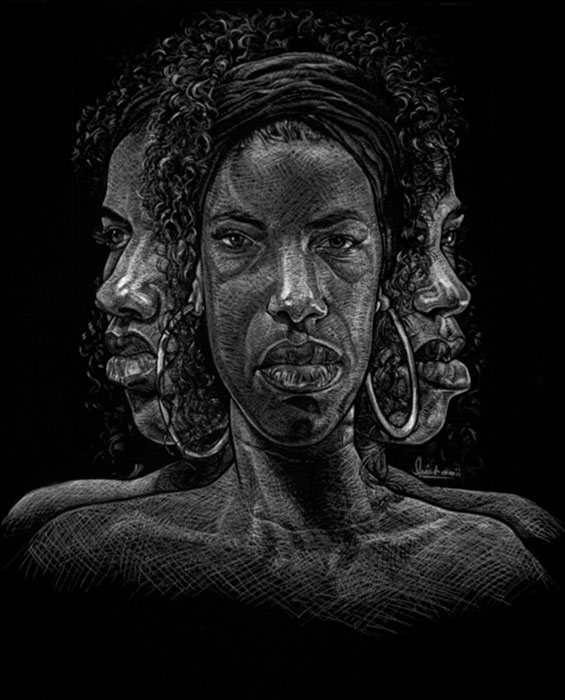

How would you feel if someone started a ‘Dear Black People’?”
— Gabe, Dear White People
No need. Mass media from Fox news makes it clear what white people think of us.”
— Sam White, Dear White People
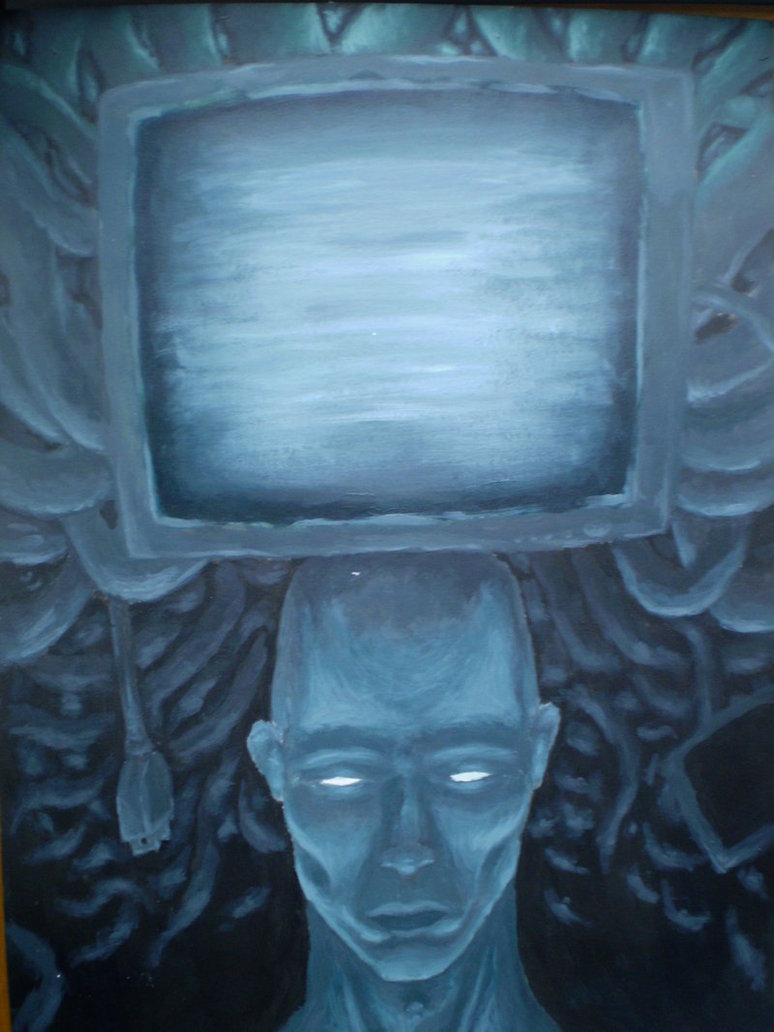
The humor in Dear White People is often sharp, seeking to expose the covert vehicles of racism that continue to propel it forward.
The media is called out for its perpetuation of a cliched black culture black American stereotypes. It mocks Hollywood’s creation of “movies for everyone,” but a separate genre of black movies just for black people.
Racism is over in American. The only people who are thinking about it are… Mexicans, probably.”
— President Fletcher, Dear White People
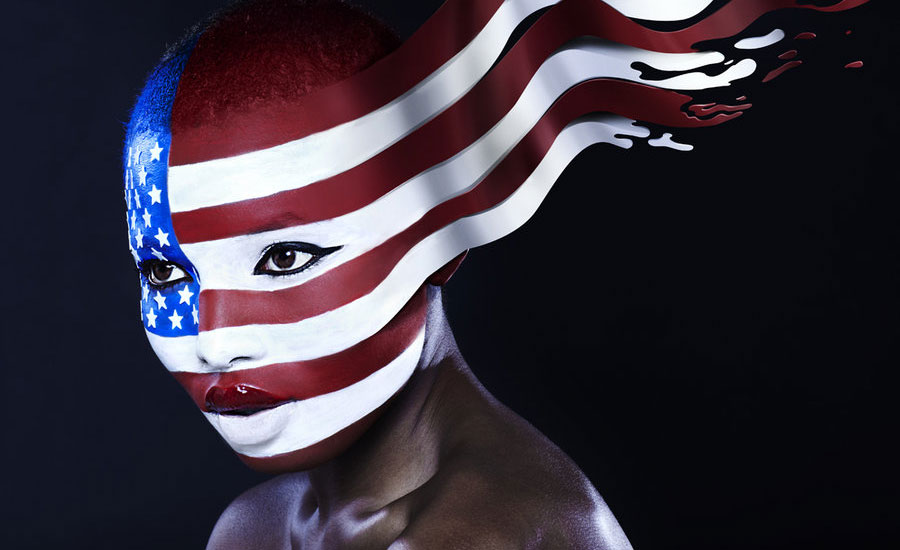
Dear White People pushes no racial agenda, instead focusing intensely on cultural identity.
The film asks questions applicable to young people of all backgrounds in today’s society as they look to define themselves before others do so for them. Social change begins with social awareness and, that awareness starts the necessary conversations that can make us uncomfortable. Comedic treatments of the black–white schism in America — comedies that provoke thoughtfulness rather than exploit tired cliches — are often the best messengers of painful truths. Laughter is a powerful social medicine. In 1967 we had Guess Who’s Coming to Dinner. And now we have Dear White People. Hopefully many more such thoughtful comedies will follow to help us become more aware of and take responsibility for the culture we shape.
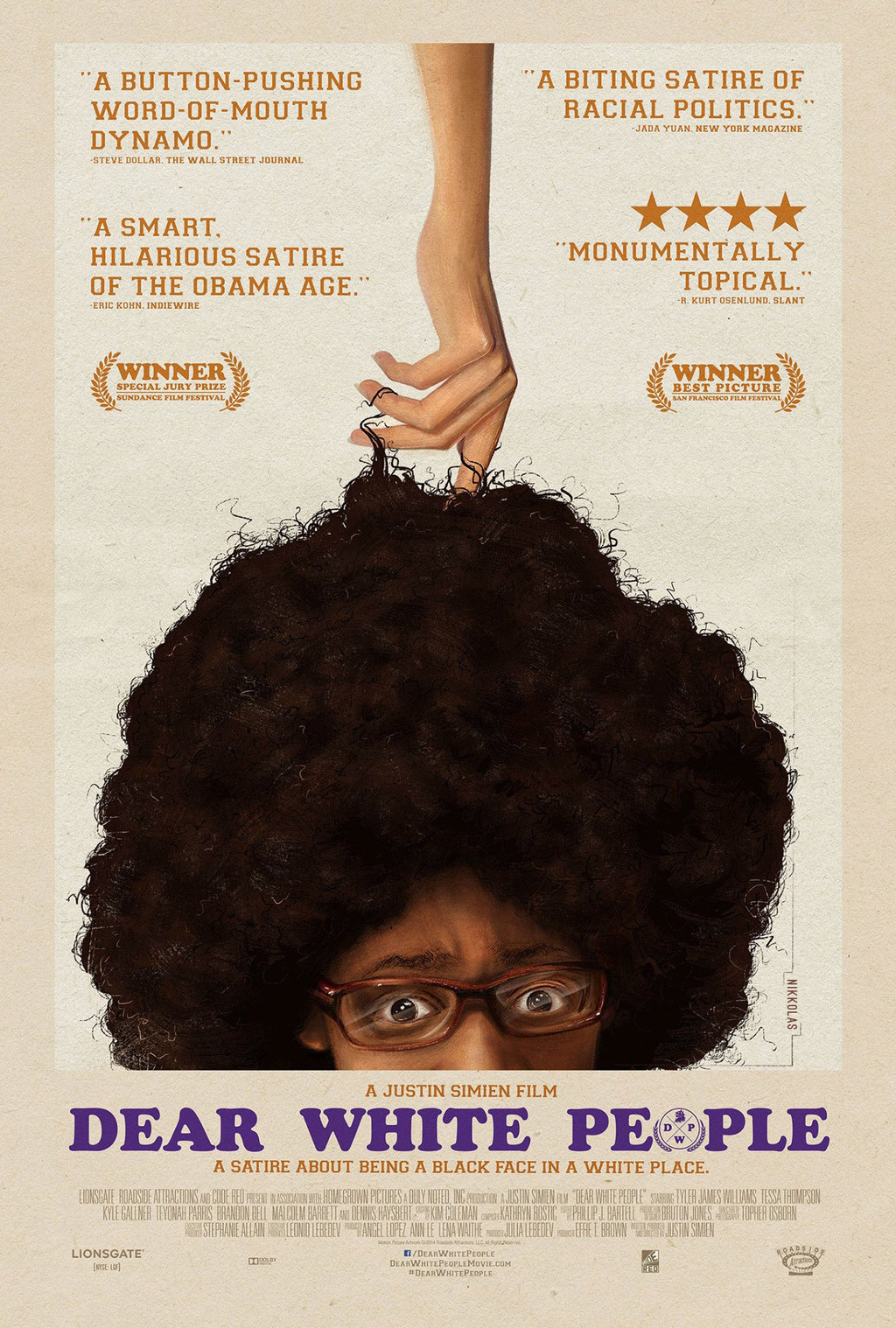
A crucial companion piece to any film is its movie poster which serves to visually communicate the essence of the film and to entice potential audience members to see it in theaters. With such a charged topic as race it is difficult to capture the ethos of Dear White People in a single image. Designer and Disney Imagineer Nikkolas Smith (Nikkolas-Smith) took up that challenge. After seeing a screening of the film he decided to create a poster which he then emailed to Simien as fan art of the movie. The poster eventually ended up as the official movie poster for the film. Nikkolas was kind enough to answer a few questions and to share his experience in creating the poster for such a commercial and cultural success.
Read More

Interview with Nikkolas Smith
Tell us a little bit about your background. How did you get started in art?
Absolutely! Well I grew up in Houston, Texas, and have been drawing since the age of one, I suppose… As most of us did. But I just never stopped. I’m a proud 80’s baby… Raised on Nintendo, Marvel, and Disney/Spielberg/Spike Lee/Reggie Hudlin films. I studied art in grade school, but went to college for Architecture, which ironically helped my Photoshop skills immensely.


A Disney Imagineer by day, you get to design incredible attractions for the Disney Theme Parks. What is it like to get to do this on a daily basis? What has been your favorite attraction to create?
It really is a dream come true, to get the chance to help design and transform those classic Disney films into an architectural storybook that billions of guests get to experience. All the attractions are so unique and amazing in their own way, but I’d say the most memorable experience I’ve had working on an attraction is having the opportunity to travel to China and work on Shanghai Disneyland, which is currently being built as we speak. What a magnificent theme park this is going to be! Start saving up now, you won’t want to miss the grand opening. 
How does a Disney Imagineer end up designing the “Dear White People” movie poster?
Funny story about that. I remember being criticized by judges in architecture school because my entries "looked too much like a Disney movie poster". Fast forward 5 years and I find myself working as a Disneyland architectural designer, and having the opportunity to meet one of my heroes, legendary poster artist Drew Struzan, at work. That talk changed everything. A few months later, I got to see the Dear White People screening at the LA Film Festival, and that night I created the DWP one–sheet! After emailing my design to the DWP director as fan art, it got passed around at Roadside Attractions and Lionsgate films until it became the official movie poster. I’m still a bit in shock at how that happened!
(Also, side note) I was greatly inspired by the painterly style of Disney artists in movies like Bolt, Wall–E and Princess and the Frog, when I started working for The Walt Disney Company as an intern. I like the sketchy, unfinished style, and also natural looking paint brushes that are actually digital.
The poster for “Dear White People” was your first movie poster design, was this an important piece for you to design personally?
Professionally, it was the biggest moment of my “freelance concept artist” career, and has helped open doors to many new opportunities in the field of concept art. It’s also made me realize how much I have to learn!
What's the balance like between creating a beautiful piece of art that communicates the feeling of the film and making something that also functions as a commercial tool for selling the film?
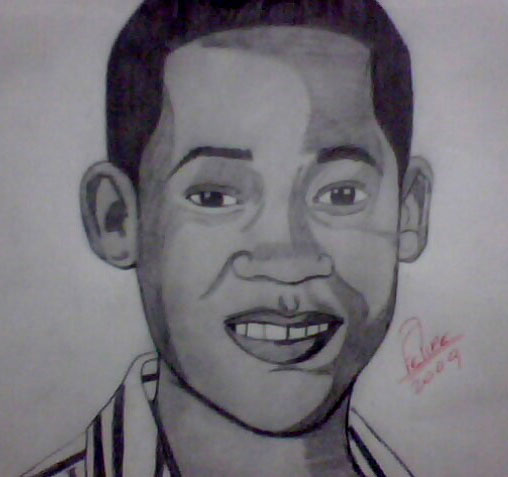
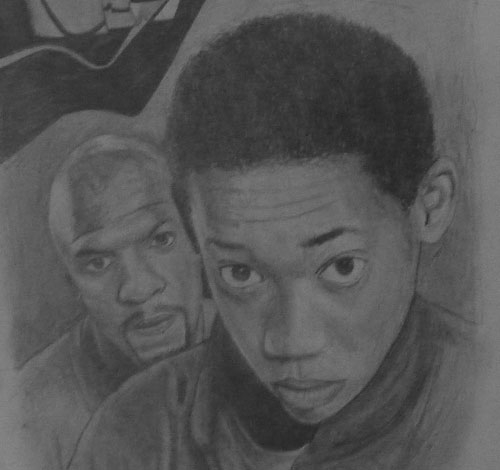
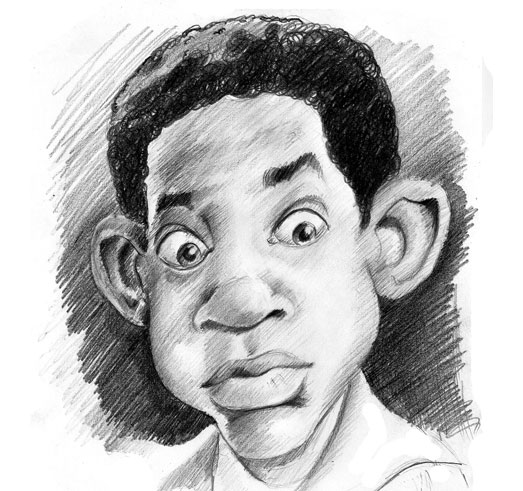
Perhaps this is some variation of form following function, but you have to first figure out what the spirit and message of the film is. Then, the look of the piece with definitely flow from sticking to that message. One of the most iconic parts of Dear White People was the “micro–aggression” of intruders having to constantly explore the unfamiliar depths of Lionel’s Afro–centric hairstyle. This one act captures the silliness and seriousness of the film. I knew if I could capture that ‘gravitational pull’ moment in one shot, it could be equally hilarious and might give an overall feeling of the comedic tension that the film has to offer.
What was your process like in creating the final design for the poster?
I started by gathering some images of Tyler James Williams (aka Lionel) that I could use as reference images to help capture that shocked/disturbed/surprised look on his face from his afro being groped. Also, I got my two favorite Photoshop brushes ready (a charcoal brush I made, and a dry paintbrush style). Charcoal for the massive amount of curly hair, and the dry brush mainly for the skin. Next, I studied a massive amount of Sam Spratt paintings, as always, haha. The first draft of the painting took about 4 hours and had more of an unfinished, sketchy style. Ultimately we decided to add another level of photorealistic brush strokes to finalize the design.
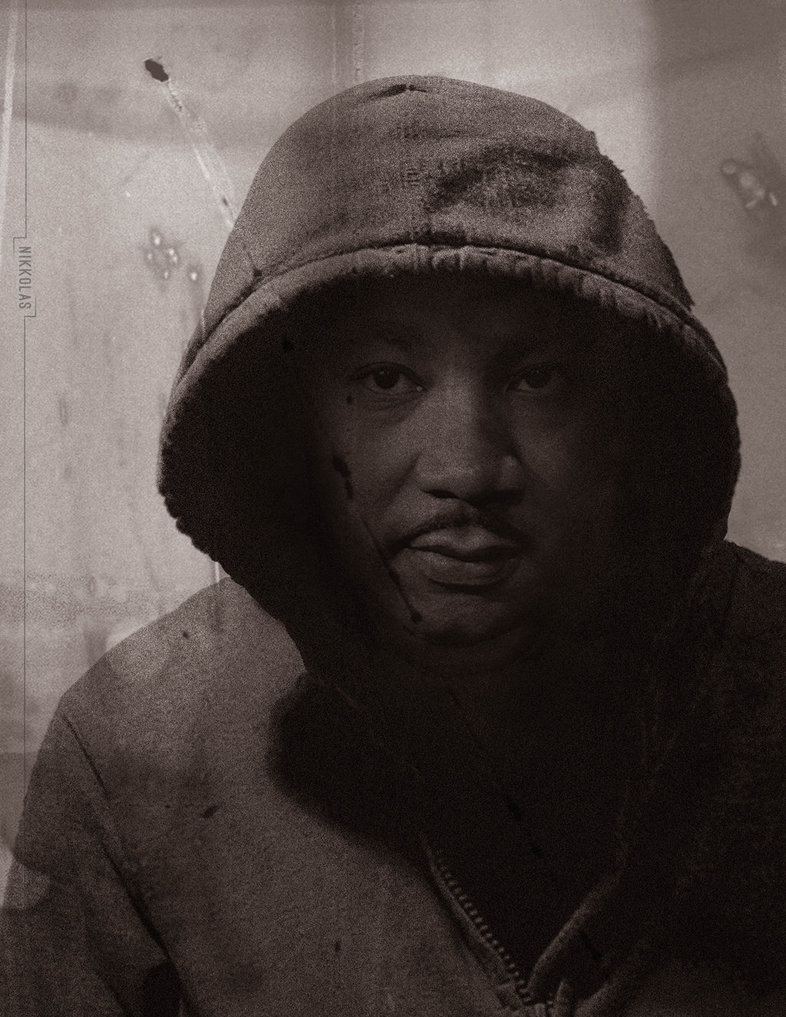
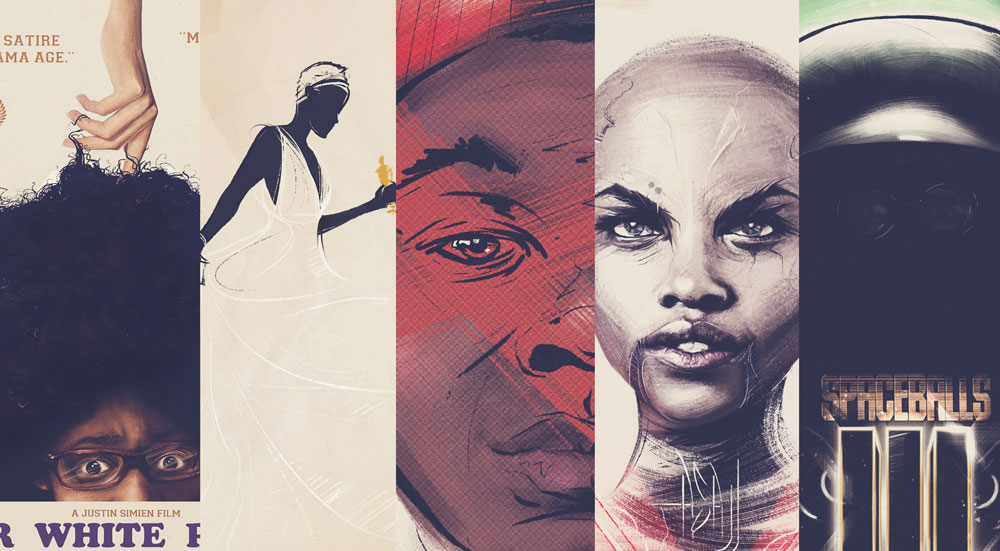
You created a piece depicting Martin Luther King Jr wearing a hoodie similar to Trayvon Martin. What message do you want to communicate via this piece?
My MLK hoodie art piece was created as a reminder that it really isn’t okay to judge someone by their outward appearance, but rather by the content of their character. It was incredibly sad to see the fearful and hateful reaction so many people had when I simply took the same “MLK in a suit” image we’ve all seen a million times, and Photoshopped a hoodie around him. All of a sudden I was depicting Dr. King as a “thug.” This is the same mindset George Zimmerman had the night he killed Trayvon Martin. The point was that this could’ve easily happened to MLK as a child, and how many potential Martin Luther Kings have been killed in the past 10 years from our flawed, fearful, stereotypical perception of our fellow human beings? From Compton & Chicago to St. Louis & New York… We must do better as a human race.
Dear White People poses a lot of questions about race and racism in current day America, but leaves it to the audience to come up with their own answers. What was the most important thing that stayed with you after watching the film?
Just the simple fact that all of us Earthlings really are more alike than we are different. We all struggle with stereotypes and finding our own identity. This crosses all color lines. Dear White People is a hilarious reminder of that.



What advice do you have for aspiring artists looking to make it professionally in the arts?
I would say find your top three artists… some of the best in the world… and study their style… emulate the greats!
Also… “The Best way to get started is to quit talking and begin doing” — Walt Disney
Also… SAM. SPRATT. ( google his art O_o )
Featured Gallery

















Your Thoughts
- Do you think documentaries about slavery and civil rights struggles or movies starring black heroes from Sidney Poitier to Denzel Washington have been the most transformative of generation’s ideas and attitudes about race?
- What movie about racial relations do you remember having the most impact on your developing social consciousness?
- Do you feel that artists have a special duty to find ways of communicating across cultural barriers with their art in order to unite our common human cores?