Site Header



Art by Nicepods
Start dreaming and create with AI
Get 10 weekly prompts free!


Description
Seoni Forest — Biographical Profile
Name: Seoni Forest
Location: Seoni Region, Madhya Pradesh, Central India
Extent: Large area of virgin forest within the current Pench National Park
Environment Type: Tropical dry and humid jungle, with areas of thorn forest, hills, rivers, swamps, plains, and ancient ruins
Main Inhabitants: Fauna community of predators and prey bound by the Law of the Jungle
Relevance: Home of Mowgli, core of Bagheera's territory, area of dominion of the Free People
General Description
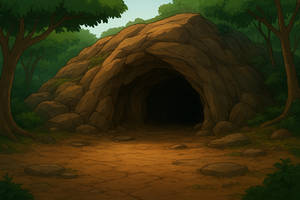
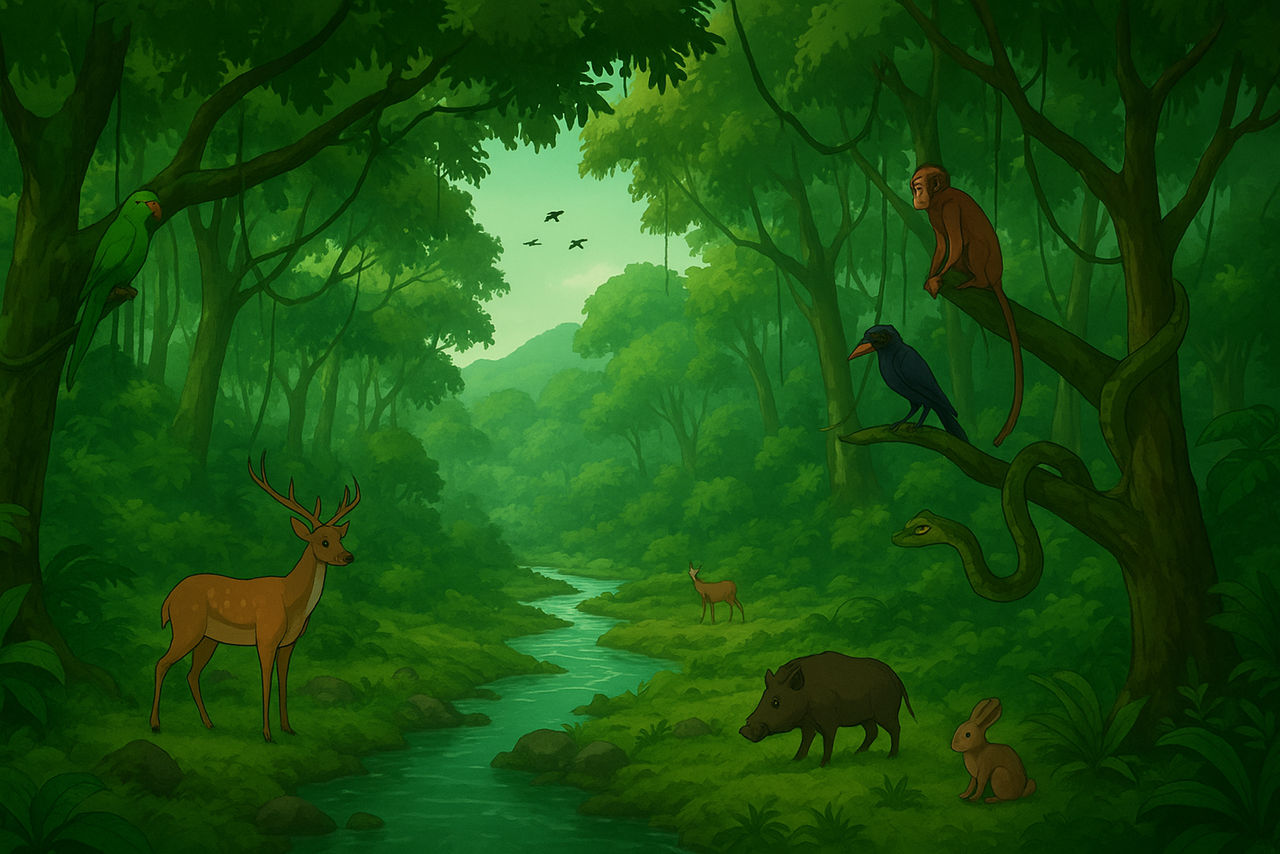
Seoni Forest is one of the oldest and densest jungles in all of Central India. A wild, vast, and profoundly inhospitable territory, where centuries-old trees rise like natural skyscrapers, connected to each other by lianas, branches, and vines that form veritable green walls.
It is a living, vibrant, and fierce world, inhabited by a vast community of animals that respect—or fear—the sacred Law of the Jungle, an ancestral code that regulates the balance between predators and prey. Here, the natural order is as strict as it is unpredictable: each dawn brings life, each night brings danger.
Today it forms part of Pench National Park, protected by law, although there are still corners where humans barely dare to venture.
Geographic Division
The jungle is divided into five main zones:
1. Northern Zone
Dominated by swamps, marshes, and wetlands.
Teeming with crocodiles, snakes, waterfowl, and dense channels of vegetation.
A challenging, humid, and silent territory, where every step can conceal a natural trap.
2. Southern Zone
Known as the Barren Highlands.
Arid, rocky, and open areas, ideal for hyenas, jackals, and moving packs.
The wind blows with a mournful sound, and the nights are especially dangerous.
3. Eastern Zone
Hilly Zone: The Seoni Hills.
Mixed forests, natural viewpoints, and narrow passes where felines and birds of prey lurk.
Ideal location for monitoring movements between territories.
4. Western Zone
Formation of craggy mountains and deep gorges.
Habitat of giant pythons, leopards, birds of prey, and vultures.
Some of the most inaccessible ruins are hidden here.
5. Central Zone
The heart of the jungle.
The densest, most dangerous, and sacred part, inaccessible to most humans.
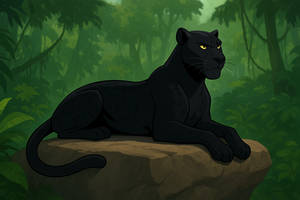
Home to Bagheera, the Free Folk, Baloo, Kaa, the Bandar-log, the vultures, and Mowgli himself.
Varied landscape:
Grasslands,
watering holes,
deep forests,
hills,
swamps to the north,
moors to the south,
and a mosaic of forgotten ruins.
The Waigunga River flows through the center, a vital axis of the ecosystem and a natural corridor for prey and predators.
Geographical highlights:
Honey Cliffs (NE): home to giant beehives and cliff-nesting birds.
Death Valley (SW): a dangerous area of quicksand, predators, and the remnants of ancient animal battles.
Cold Lairs: ruins that serve as home to the Bandar-log.
Lost cities, temples, and fortresses swallowed by vegetation, echoes of ancient civilizations like the legendary kingdom of the Maharaja.
Jungle Fauna
The variety of species is overwhelming. Among the most notable are:
Large predators: Bengal tiger, Indian leopard, dholes, dholes, swamp crocodile.
Other carnivores: Indian wolf, golden jackal, jungle cat, striped hyena, civets, genet, foxes, badgers.
Herbivores: sambar deer, chital, nilgo, gaur, water buffalo, blackbuck, four-horned antelope, wild boar, mouse deer.
Primates and arboreal animals: langur, macaque, loris, squirrel, bat, langurs, and gibbons (Bandarlog).
Reptiles: Indian python, cobras, vipers, chameleons, monitor lizards, flying lizards, star tortoise.
Birds: kites, vultures, eagles, woodpeckers, storks, herons, hornbills, parrots, peacocks, and cauldrons.
Others: pangolins, porcupines, shrews, gerbils, tailorbirds, and ducks.
A rainforest where each species occupies a niche, and each niche determines survival.
History and Legacy
The Seoni Rainforest has existed since time immemorial. It is said to have been ancient when the first human kingdoms built walls and war chariots, when rulers like King Maharash dominated the region with millions of subjects.
Today, those empires are nothing more than ruins swallowed by vegetation, refuges for monkeys, panthers, and birds of prey.
For centuries, humans feared the jungle: wild beasts, moonless nights, roars echoing through the trees… Thus, villages sprang up around the jungle, in an attempt to live nearby but without venturing deep within.
With the arrival of modernity, many abandoned the villages, building large cities like Mumbai, Kolkata, and Agra. And Seoni became a protected natural park, where hunting is no longer an honor, but a crime.
Even so, not all humans respect these rules. Some poachers, like Buldeo, still see the jungle as their personal preserve.
Meaning for the animals
For them, humans are “the real beast,” unpredictable and destructive.
But with the passage of time, they understand—some more than others—that not all humans are the same. The jungle, despite everything, remains:
a sanctuary,
a battlefield,
a home,
and a realm where the Law of the Jungle is still sacred.
inhabitants:






Visitors:


Locations: