Gallery
All
Featured
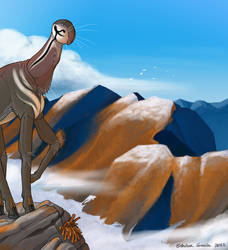
Aurora
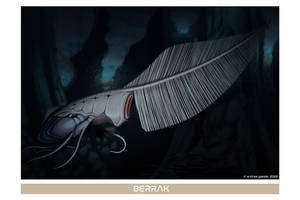
SOPHONTS
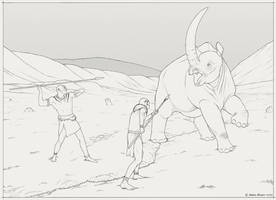
Orklands
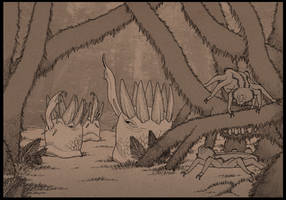
SSoE
Dreams
TERRA MIRUS
Posthumans
Hidden world
Future Biology old

Superheroes
School work
Photomanipulations
Snaiad
Redesigns Work for others
Photography
EXPANSION
Post Apocalypse
Scraps
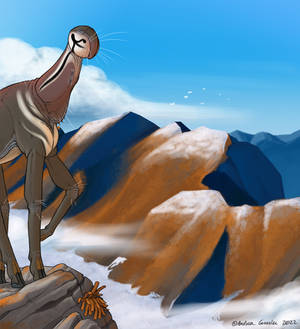
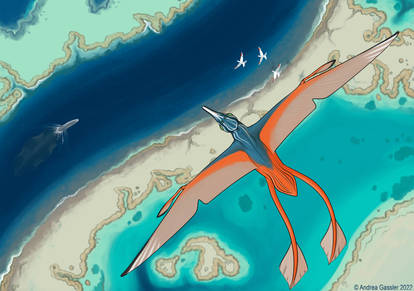
Aurora is the second planet in a distant planetary system.
It is a highly geologically active world with many active volcanoes.
There are two different types of plants present on Aurora:
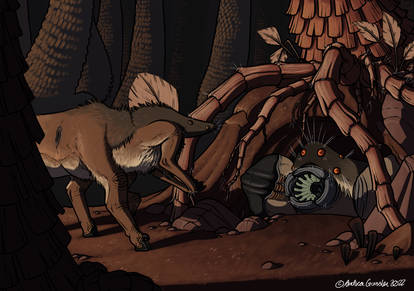
Photosynthetic and chemosynthetic ones. The photosynthetic plants gain energy from sunlight, just like plants on Earth. The chemosynthetic ones however get their energy from the many chemicals in the atmosphere. There is no grass on Aurora, the land instead being overgrown by countless photosynthetic unicellular organisms that can join together to form larger, plant-like organisms.
This is not the only instance of the lines between animals and plants blurring on Aurora as many animals exhibit plant-like features and vice versa. An example of this is the sessile, plant-like stage in the life cycle of Auroran animals.
Due to the axis not being tilted like Earth’s, there are no real seasons as we’d know it but changes in the weather and temperatures due to the slow rotation period leading to diurnal «seasons». Water evaporates during the long dry days. Warm, most air rises up from the oceans, which leaves less air left near the surface which causes an area of lower air pressure. The air around this region has higher pressure and rushes in to fill the low pressure area. This air gets warm and moist and rises as well. This cycle keeps going and fuels large cyclones with a lot of rain at dusk. As night approaches, temperatures drop, rain can turn into snow. As temperatures get warmer again at dawn, temporary wetlands and marshes are created by melting snow and ice.