Site Header

Deviation Actions


Promoted Deviations


Suggested Deviants


Suggested Collections





Description
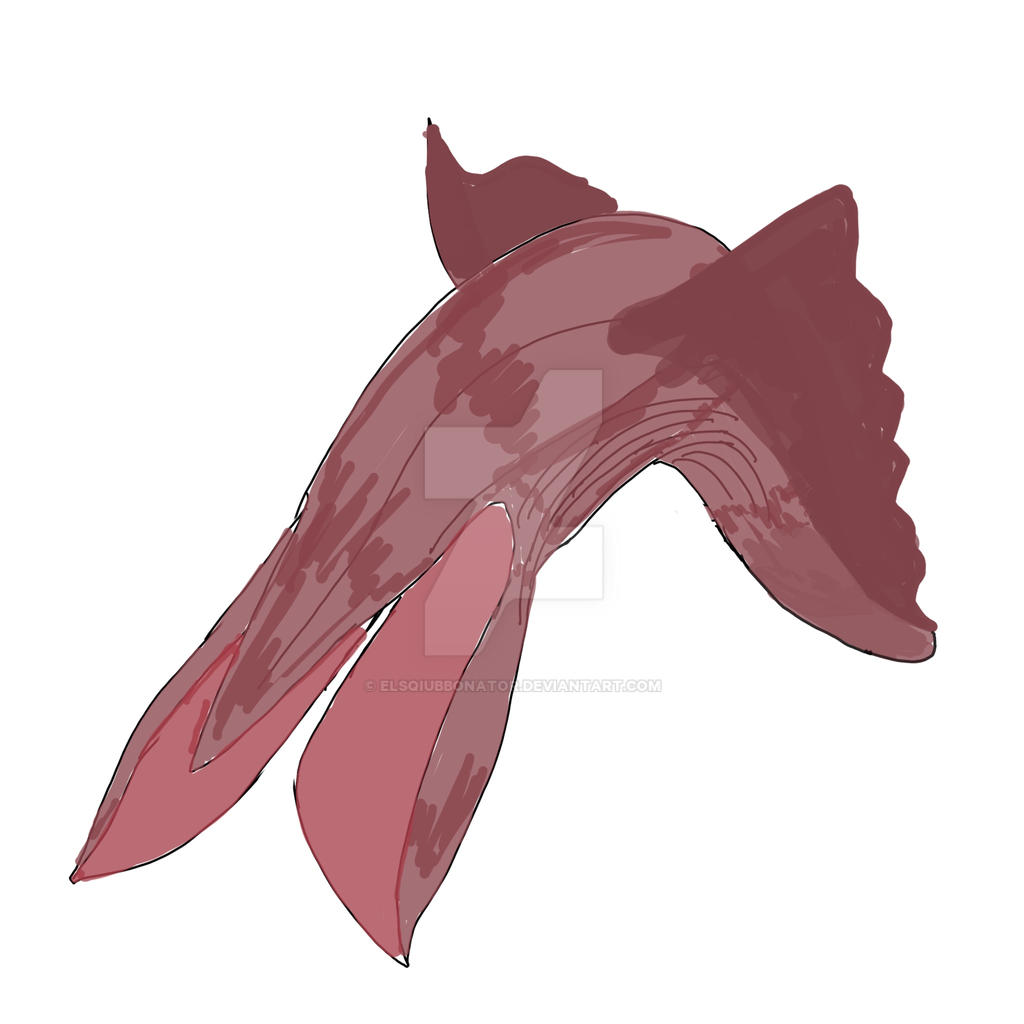
100 million years in the future, mollusks rule the seas. Cephalopods-- octopus and squid-- of every shape and size have largely displaced bony fish in marine habitats, as they were dealt a crippling blow in the mass extinction 20 million years previously. They range from tiny, anchovy-like schooling filter-feeders to fast, vicious shark-like predators. But in the very deepest regions of the sea, where light from the surface no longer reaches, dwells the largest invertebrate of all, which isn't a cephalopod. The Giant Kujirani (Cetocochlea gigantea) is the largest gastropod, and indeed the largest mollusk, to have ever lived, at up to 50 feet long and weighing over a ton.
Despite its surreal, almost alien appearance, the Giant Kujirani's ancestors are a group of animals familiar to anyone who knows about sea life. It is an enormous, pelagic, filter-feeding nudibranch-- in other words, a sea slug. While many sea slug have vestigial shells inside of their bodies, the Giant Kujirani has no shell whatsoever. Its red coloration is an adaptation to deep sea life. At the depths where it lives, most animals are unable to see red light, since it does not penetrate this deep, and therefore many of them are colored red or have red bioluminescence in order to hide from predators. While the Great Kujirani is one of the largest animals in its ecosystem, it does have a few predators, chief among them the Midgardschlange-- a deep-diving seasnake which fills a niche similar to the modern sperm whale. The Giant Kujirani is not a strong swimmer, propelling itself lazily through the water with the cloak-like flaps on the sides of its body.
It is a suspension feeder, with its mouth surrounded by two wide "scoops" which are coated in a layer of mucus. The scoops can be expanded and retracted, and when they are withdrawn, the animal feeds on anything that has become trapped in them. Rather than actively engulfing and swallowing its food, as the now extinct baleen whales did and filter-feeding seasnakes currently do, the Giant Kujirani is a passive feeder, consuming tiny particles of "marine snow" that fall from the higher layers of the ocean. While many deep-sea animals feed on this detritus, the Giant Kujirani is one of the few that has specifically evolved to trap it in large quantities. This has allowed the Giant Kujirani to grow to tremendous sizes.
Image size
2048x2048px 240.17 KB
© 2021 - 2026 ElSqiubbonator
Comments0
Join the community to add your comment. Already a deviant? Log In