Site Header

Deviation Actions


Promoted Deviations


Suggested Deviants


Suggested Collections


Description
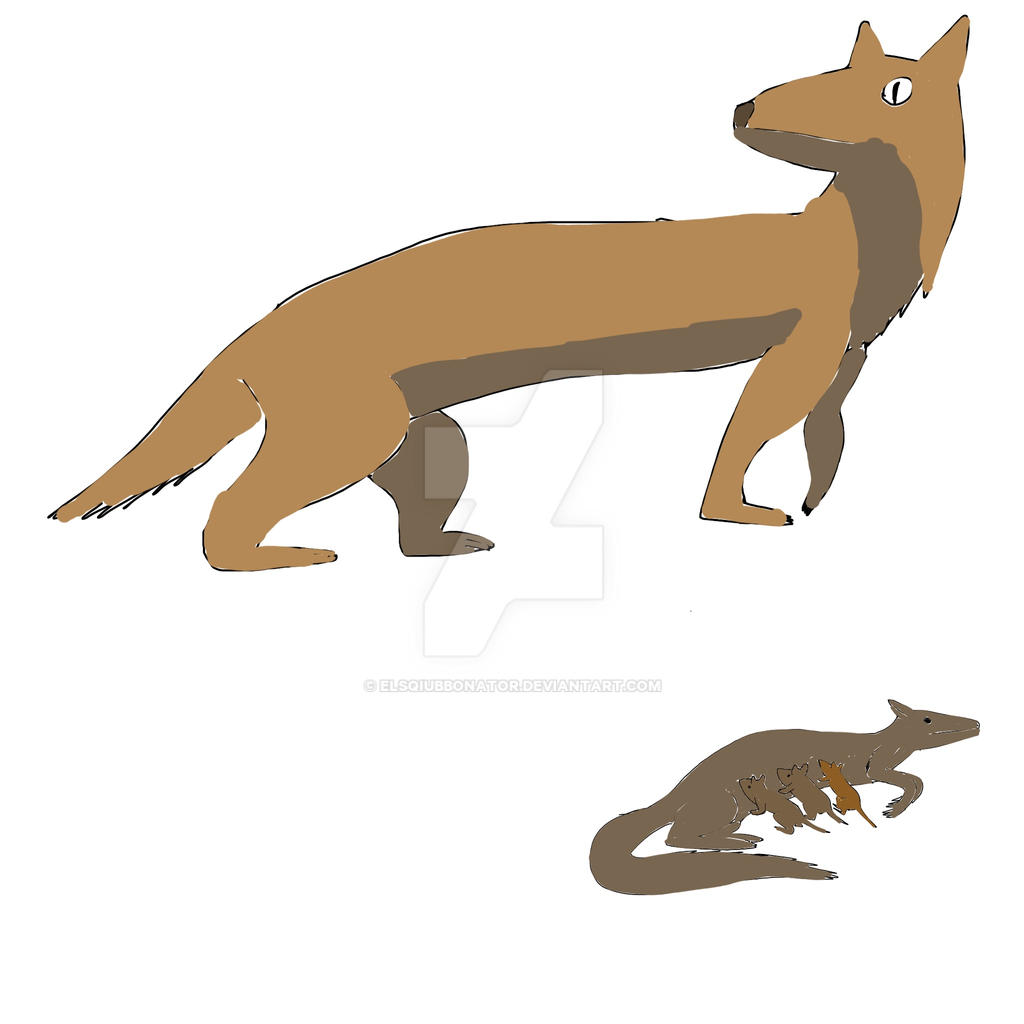
Parental care for their offspring is a universal trait of mammals, more than any other class of animals. There are, for example, birds that lay their eggs in other birds' nests to be taken care of by their unsuspecting foster parents, and some insects and even fish display similar behavior, but it is nowhere to be found in mammals-- at least not today. Sixty-five million years in the future, the Changeling Mongoose (Mustelictis molothrus) is unique in being an obligate mammalian brood parasite. Its host is the closely related Centurion Mongoose (Mustelictis aggregatus), so named for its habit of living in colonies of around one hundred. Like modern meerkats, Centurion Mongooses raise their young in burrows underground, and a colony may contain several breeding pairs.
The Changeling Mongoose takes advantage of this. When she is ready to give birth, a pregnant female Changeling Mongoose enters the nearest Centurion Mongoose colony. During this time, she emits a scent identical to that of a female Centurion Mongoose, so the males on guard do not notice the ruse. Once inside the colony, she gives birth inside the closest available brood chamber, and then leaves as quickly as she can. Her pup-- usually only one at a time--is then nursed and cared for by the Centurion Mongooses, both while it is nursing, and later when it ventures outside and learns to hunt for itself. When it is old enough to hunt on its own, it abandons the colony in search of prey and a mate.
Although, like all carnivorans, Centurion Mongooses can see in color perfectly well, they rarely seem to notice the difference between their own offspring and baby Changeling Mongooses, which have lighter fur. Doubtlessly their identical odor plays a large part in this, allowing the interlopers to nurse undisturbed. There is, however, a sinister side to the Changeling Mongoose's activity. A nursing mother Centurion Mongoose usually only produces enough milk to provide for her biological children, but when a Changeling Mongoose enters the colony, all bets are off. At least one pup, usually the youngest or smallest, will be denied access to a nipple repeatedly until it starves.
Because the Centurion Mongoose and the Changeling Mongoose are so closely related, they occasionally hybridize. These hybrid offspring, while theoretically fertile, rarely live long enough to breed because Changeling Mongooses lack any sort of instinct to care for their young, and in fact will see them as prey if they encounter them after birth.
Image size
2048x2048px 203.96 KB
© 2021 - 2026 ElSqiubbonator
Comments0
Join the community to add your comment. Already a deviant? Log In